

Introduction
Nestled in the cold, high-altitude landscapes of the Himalayas, Ladakhi Herbal Tea is more than just a warm beverage—it is a symbol of comfort, healing, and tradition. Popular across the region of Ladakh, this herbal infusion is cherished by locals for its soothing warmth and medicinal properties. Made from native Himalayan herbs, it is especially valued in Ladakh’s freezing winters, where temperatures can drop drastically.
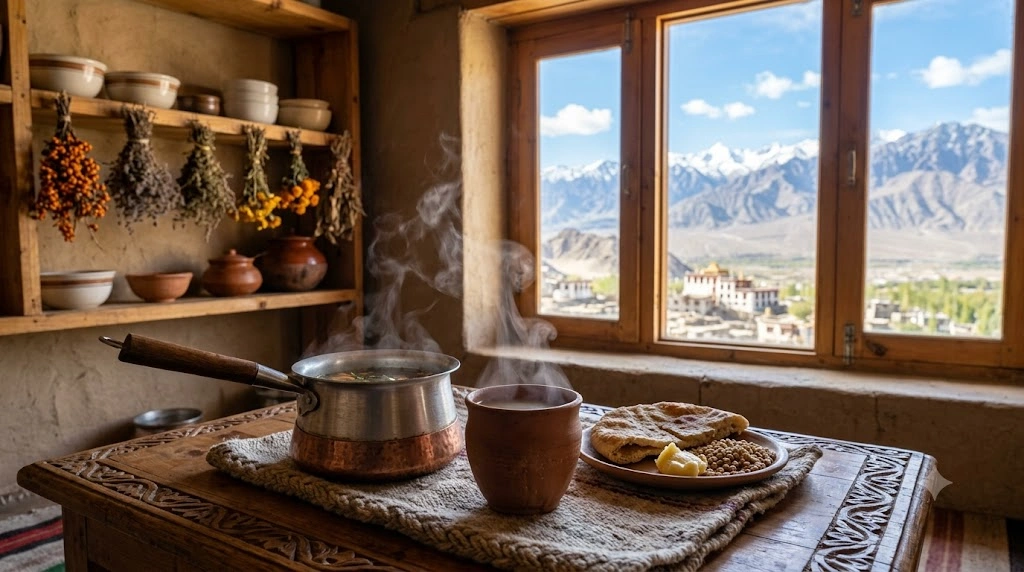
Today, Ladakhi Herbal Tea is gaining popularity among travelers seeking authentic regional experiences and natural wellness drinks rooted in ancient Himalayan traditions.
What is Ladakhi Herbal Tea?
Ladakhi Herbal Tea is a traditional infusion prepared using locally grown herbs, flowers, and sometimes dried berries found in the Himalayan region. Unlike regular black or green tea, it does not rely on Camellia sinensis leaves. Instead, it blends wild medicinal plants known for their healing qualities.

 6°C
6°C
- Temperature
- Rain Chance
- Wind


The taste of Ladakhi Herbal Tea is mild, earthy, and slightly floral, with subtle hints of bitterness depending on the herbs used. It is commonly consumed for warmth, digestion, immunity support, and altitude adaptation.
Culturally, it plays an important role in Ladakhi households, often served to guests as a gesture of hospitality and care.
Origin and History
The origins of Ladakhi Herbal Tea are deeply rooted in the traditional Tibetan-Buddhist culture of the Himalayan region. For centuries, the people of Ladakh have relied on local flora to create natural remedies for survival in harsh climatic conditions.
In ancient times, monks and villagers would gather wild herbs from mountain slopes and valleys, drying them for use during long winters. These herbal infusions were not just beverages but essential medicinal preparations used to treat fatigue, colds, and digestive issues.
Over time, the practice evolved into a daily ritual. With limited agricultural resources in the cold desert terrain, herbal teas became a sustainable and accessible way to maintain health and warmth.
Ingredients
Main Ingredients Used
The ingredients of Ladakhi Herbal Tea vary depending on availability and household traditions, but commonly include:
- Wild mint (Pudina varieties)
- Himalayan thyme
- Rhododendron petals (locally known as Buransh in some regions)
- Sea buckthorn berries or leaves
- Sowa (wild fennel-like herb)
- Dried rose petals
- Local medicinal roots and grasses
Each ingredient contributes unique medicinal properties, from aiding digestion to boosting immunity and improving circulation in high-altitude climates.
How It Is Prepared
The preparation of Ladakhi Herbal Tea is simple but deeply traditional.
- Fresh or dried herbs are collected and cleaned.
- Water is brought to a boil, often in a metal kettle or clay pot.
- Selected herbs are added to the boiling water.
- The mixture is simmered for 5–10 minutes to extract flavors and nutrients.
- It is then strained into cups and sometimes lightly sweetened with honey or natural rock sugar.
In some households, herbs are sun-dried in advance and stored for year-round use, ensuring a steady supply during harsh winters when fresh plants are scarce.
Variations
Ladakhi Herbal Tea has several regional and modern variations:
- Sea Buckthorn Tea: A popular modern version made using antioxidant-rich berries.
- Rhododendron Tea: Known for its bright color and slightly tangy flavor.
- Mint-Heavy Infusions: Focused on digestive benefits and refreshing taste.
- Mixed Herbal Blends: A combination of multiple wild herbs for stronger medicinal effects.
- Tourist-Friendly Versions: Often mildly flavored for international visitors in cafes across Leh.
Each variation reflects local availability of herbs and evolving taste preferences.
Why You Should Try It
Ladakhi Herbal Tea is not just a drink—it is a wellness experience rooted in Himalayan tradition.
- Natural healing properties: Packed with antioxidants and medicinal compounds.
- Unique flavor profile: Earthy, floral, and refreshing unlike commercial teas.
- Cultural connection: Offers insight into Ladakh’s ancient lifestyle and herbal knowledge.
- Altitude-friendly beverage: Helps the body adapt to cold, high-altitude conditions.
- Caffeine-free option: Ideal for those avoiding stimulants.
For travelers, it provides a warm introduction to the slow, mindful lifestyle of Himalayan communities.
Where to Try It
You can experience authentic Ladakhi Herbal Tea across local homes, monasteries, and cafes in Leh and surrounding regions.
In Leh town, small tea houses and family-run cafés often serve traditional herbal infusions made from freshly foraged ingredients. Monasteries may also offer herbal drinks as part of hospitality for visitors.
For a more curated experience, eco-lodges and homestays in villages around Leh frequently prepare seasonal herbal teas using locally harvested plants, giving visitors a truly immersive cultural experience.
FAQs
1. Is Ladakhi Herbal Tea caffeinated?
No, it is naturally caffeine-free as it is made from herbs rather than tea leaves.
2. What does Ladakhi Herbal Tea taste like?
It has an earthy, floral, and mildly bitter taste depending on the herbs used.
3. Is it safe for daily consumption?
Yes, when made from common local herbs, it is generally safe and often consumed daily by locals.
4. Can tourists drink Ladakhi Herbal Tea?
Absolutely. It is commonly served to visitors in Ladakh as a welcoming beverage.
5. Does it have health benefits?
Yes, it is believed to support digestion, immunity, and overall wellness, especially in cold climates.
6. Where can I buy Ladakhi Herbal Tea ingredients?
Local markets in Leh sell dried herbs and ready-made herbal tea blends.
Conclusion
Ladakhi Herbal Tea is a beautiful reflection of Himalayan wisdom, blending nature, tradition, and wellness into a single comforting cup. Rooted in the lifestyle of Ladakh, it continues to serve as both a healing remedy and a cultural symbol.
Whether you are traveling through the mountains or exploring global herbal traditions, this tea offers a unique opportunity to experience the purity of Himalayan herbs. Its soothing warmth, natural ingredients, and cultural depth make it a must-try beverage for anyone seeking authentic regional flavors.