

Introduction
Marzan is one of Ladakh’s lesser-known yet culturally significant traditional foods. Deeply rooted in the region’s Himalayan heritage, Marzan reflects the resourcefulness and culinary wisdom of the Ladakhi people. Made primarily from roasted barley flour, this simple yet nourishing dish has sustained generations living in the harsh, high-altitude environment of Ladakh.
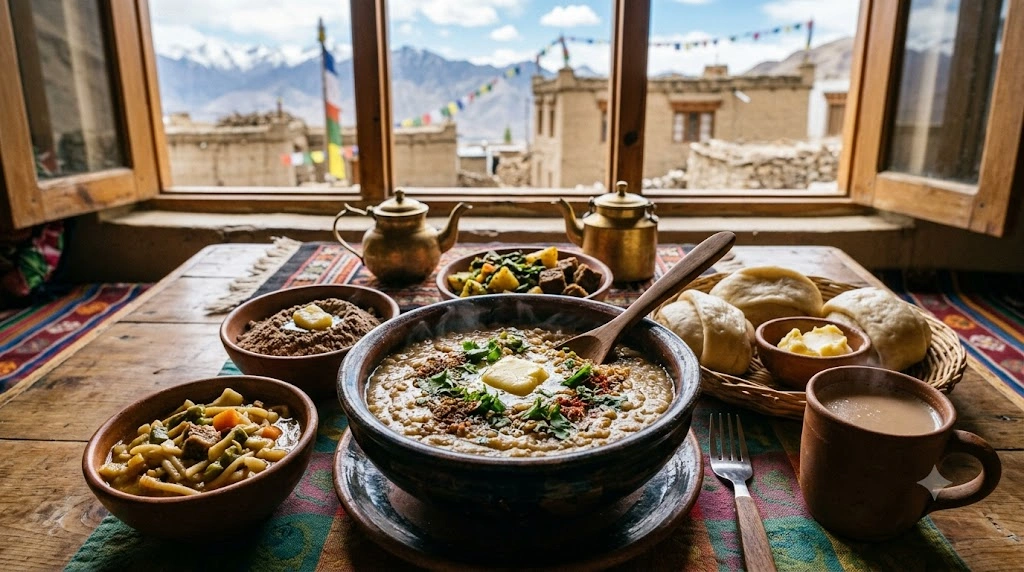
Today, Marzan continues to be enjoyed in traditional households and is increasingly gaining attention among travelers seeking authentic Himalayan cuisine. Its wholesome ingredients, earthy flavor, and historical significance make it a must-try for anyone interested in Ladakhi food culture.
What is Marzan?
Marzan is a traditional Ladakhi food prepared mainly from roasted barley flour, locally known as tsampa. The flour is typically mixed with warm water, butter, yak butter, milk, or buttermilk until it forms a soft dough or thick paste. Depending on local customs, Marzan may be served alongside vegetables, meat stews, or dairy products.

 5°C
5°C
- Temperature
- Rain Chance
- Wind


The taste of Marzan is mild, nutty, and pleasantly earthy. Roasting the barley gives it a rich aroma, while butter or dairy adds creaminess and depth. Though simple in appearance, the dish is highly nutritious and provides long-lasting energy, making it especially suitable for Ladakh’s cold climate.
Marzan is more than just food—it represents Ladakh’s agricultural traditions and the importance of barley, one of the few crops that thrives in the region’s challenging environment.
Origin and History
Marzan has been prepared in Ladakh for centuries, dating back to a time when self-sufficiency was essential for survival. Due to the region’s long winters, limited farmland, and remote mountain villages, barley became the staple grain because of its ability to withstand cold temperatures and short growing seasons.
Roasting barley before grinding it into flour made it easier to preserve for extended periods without spoilage. Families could carry the flour while traveling or working in the fields, preparing Marzan quickly by simply adding water or dairy.
The dish became an important part of everyday life and was commonly eaten by farmers, traders, monks, and nomadic communities. Today, while modern foods have become more common, Marzan remains a cherished symbol of Ladakhi heritage and traditional mountain living.
Ingredients
Marzan uses only a handful of simple ingredients, highlighting the natural flavors of locally grown produce.
Main Ingredients
- Roasted barley flour (tsampa)
- Warm water
- Yak butter or regular butter
- Milk or buttermilk (optional)
- Salt
- Fresh curd or yogurt (optional)
Some households also serve Marzan with:
- Vegetable curry
- Yak meat stew
- Lentils
- Local cheese
- Fresh herbs
The ingredients are nutritious, readily available, and perfectly suited to Ladakh’s climate.
How It Is Prepared
Preparing Marzan is quick and requires minimal cooking.
Step 1: Roast the Barley
Barley grains are roasted until aromatic and lightly browned.
Step 2: Grind into Flour
The roasted grains are finely ground to create tsampa flour.
Step 3: Mix the Ingredients
The flour is placed in a bowl and gradually mixed with warm water, butter, milk, or buttermilk while stirring continuously.
Step 4: Shape the Mixture
The mixture is kneaded into a smooth dough or thick paste, depending on personal preference.
Step 5: Serve Fresh
Marzan is usually served immediately, often accompanied by butter tea, vegetables, meat dishes, or yogurt.
Its simplicity makes it a convenient meal while retaining excellent nutritional value.
Variations
Like many traditional dishes, Marzan has several regional and household variations.
Traditional Marzan
Prepared with roasted barley flour, warm water, salt, and yak butter.
Dairy Marzan
Mixed with milk, buttermilk, or yogurt for a creamier texture and richer flavor.
Sweet Marzan
Some families add honey, sugar, or dried apricots to create a mildly sweet version, especially during festivals.
Modern Marzan
Restaurants serving tourists sometimes include nuts, dried fruits, or herbs while presenting the dish in a more contemporary style without losing its traditional essence.
Why You Should Try It
Marzan offers much more than a satisfying meal.
Highly Nutritious
Roasted barley is rich in dietary fiber, vitamins, minerals, and complex carbohydrates that provide sustained energy.
Authentic Ladakhi Experience
Few dishes represent Ladakhi culinary traditions as genuinely as Marzan.
Perfect for Cold Weather
Its warming ingredients make it ideal for high-altitude climates and chilly temperatures.
Simple Yet Flavorful
The roasted barley creates a naturally nutty taste that pairs beautifully with butter and dairy.
Rich Cultural Heritage
Trying Marzan offers insight into centuries-old Himalayan food traditions and the resilience of Ladakhi communities.
Where to Try It
Although Marzan is mostly a home-cooked meal, visitors can occasionally find it in traditional restaurants and homestays across Ladakh.
Popular places include:
- Traditional Ladakhi homes through village homestay programs
- Family-run restaurants in Leh
- Local food festivals celebrating Ladakhi cuisine
- Eco-tourism villages in Sham Valley
- Cultural events showcasing traditional Himalayan foods
For the most authentic experience, visiting rural villages or staying with local families often provides the opportunity to enjoy freshly prepared Marzan made using traditional methods.
FAQs
1. What is Marzan made from?
Marzan is primarily made from roasted barley flour (tsampa), mixed with water, butter, milk, or buttermilk.
2. Is Marzan healthy?
Yes. It is rich in fiber, complex carbohydrates, and essential nutrients while being naturally filling and energy-rich.
3. Is Marzan vegetarian?
Traditional Marzan is vegetarian when prepared with butter and dairy products. Vegan versions can be made using only water and plant-based alternatives.
4. What does Marzan taste like?
It has a mild, nutty, roasted flavor with a creamy texture when mixed with butter or milk.
5. Can tourists easily find Marzan?
While not available in every restaurant, traditional eateries, village homestays, and cultural festivals in Ladakh often serve Marzan.
6. Why is barley important in Ladakhi cuisine?
Barley is one of the few grains that grows successfully in Ladakh’s harsh climate, making it a staple ingredient in many traditional dishes.
Conclusion
Marzan is a beautiful example of Ladakh’s simple, nutritious, and sustainable food culture. Prepared from roasted barley flour and a few wholesome ingredients, it has nourished generations living in one of the world’s most challenging landscapes. Its earthy flavor, impressive nutritional value, and deep cultural significance make it a memorable culinary experience for travelers seeking authentic Himalayan cuisine. Whether enjoyed in a village home or at a traditional Ladakhi restaurant, Marzan offers a genuine taste of Ladakh’s rich heritage.