

Introduction
Momos are one of the most popular street foods across the Himalayan region and have become a favorite snack throughout India. Known for their juicy filling, soft wrappers, and delicious dipping sauces, Momos are enjoyed by people of all ages. Whether steamed, fried, or served in a spicy soup, these flavorful dumplings offer a perfect combination of taste, texture, and comfort.
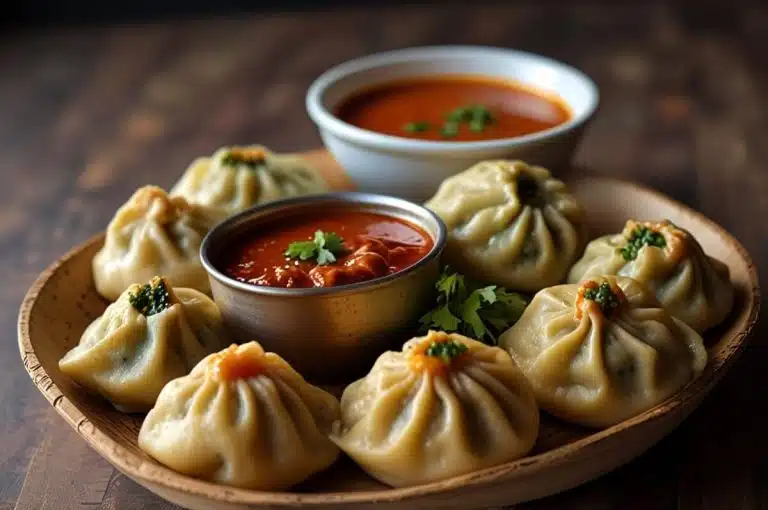
Originally associated with the Himalayan communities of Tibet and Nepal, Momos have evolved into a culinary sensation that can be found everywhere from roadside stalls to fine-dining restaurants. Their versatility and irresistible flavor have made them one of the most sought-after Asian dumplings.
What is Momos?
Momos are traditional dumplings made with a thin wheat flour wrapper filled with a variety of savory ingredients. The filling commonly includes minced chicken, pork, mutton, beef (in some regions), or vegetables such as cabbage, carrots, onions, mushrooms, and paneer.

 6°C
6°C
- Temperature
- Rain Chance
- Wind


These dumplings are usually steamed until tender, although fried and pan-fried versions are equally popular. Momos are typically served with spicy tomato chutney, chili sauce, or clear soup.
The taste of Momos is mild yet satisfying. The soft outer layer complements the juicy, flavorful filling, while the spicy dipping sauce adds a bold kick. Their cultural significance extends beyond food, representing the rich culinary traditions of Himalayan communities where family recipes have been passed down for generations.
Origin and History
The origins of Momos are generally traced back to Tibet, where dumplings have been part of local cuisine for centuries. From Tibet, the dish spread to neighboring Nepal, Bhutan, and the Himalayan regions of northern India through trade routes and cultural exchanges.
Over time, different communities adapted the recipe using locally available ingredients. In Nepal, Momos became a national favorite, while in India they gained immense popularity in states such as Sikkim, Arunachal Pradesh, Ladakh, Himachal Pradesh, and West Bengal.
Today, Momos are one of India’s most beloved street foods. Vendors and restaurants continue to create innovative versions while preserving the traditional cooking techniques that made the dish famous.
Ingredients
The ingredients for Momos are simple yet flavorful.
For the Dough
- Wheat flour (all-purpose flour)
- Water
- Salt
- A small amount of oil (optional)
For the Filling
- Minced chicken, pork, mutton, or vegetables
- Cabbage
- Carrots
- Onion
- Garlic
- Ginger
- Spring onions
- Mushrooms or paneer (optional)
- Soy sauce
- Salt
- Black pepper
- Sesame oil or cooking oil
Accompaniments
- Spicy tomato chutney
- Red chili sauce
- Garlic sauce
- Clear vegetable or chicken soup
How It Is Prepared
Making Momos involves several simple steps.
First, a soft dough is prepared by mixing flour, water, and salt. It is then rested until smooth and pliable.
Meanwhile, the filling is made by finely chopping vegetables or mixing minced meat with garlic, ginger, onions, seasoning, and herbs.
Small portions of dough are rolled into thin circles. A spoonful of filling is placed in the center of each wrapper before folding and sealing the edges into attractive pleated shapes.
The Momos are then steamed for around 10–15 minutes until the wrappers become soft and translucent. Fried or pan-fried versions are cooked after steaming to create a crispy exterior.
Finally, they are served hot with spicy chutney, making for an irresistible meal or snack.
Variations
One reason for the popularity of Momos is the wide variety available today.
Steamed Momos
The classic version with soft wrappers and juicy filling.
Fried Momos
Deep-fried until golden brown for a crunchy texture.
Pan-Fried (Kothey) Momos
Steamed first, then pan-fried to create a crispy base.
Tandoori Momos
Popular in India, these Momos are marinated in yogurt and spices before being cooked in a tandoor.
Jhol Momos
A Nepalese specialty served in a flavorful spicy sesame and tomato broth.
Chocolate Momos
A modern dessert variation filled with chocolate and served with sweet sauces.
Why You Should Try It
Momos are much more than ordinary dumplings.
Their combination of soft dough, juicy filling, and spicy chutney creates a satisfying balance of flavors and textures. They are available in vegetarian and non-vegetarian options, making them suitable for a wide range of preferences.
Momos also offer a glimpse into the culinary traditions of the Himalayan region. Every bite reflects centuries of cultural exchange and local adaptation.
Affordable, filling, and incredibly flavorful, they remain one of the best comfort foods for travelers and food lovers alike.
Where to Try It
Some of the best places to enjoy authentic Momos include:
- Ladakh – Traditional Himalayan-style Momos served with local flavors.
- Sikkim – Known for authentic Tibetan and Nepalese recipes.
- Darjeeling, West Bengal – Famous for roadside momo stalls and family-run restaurants.
- Delhi – Offers countless varieties, including steamed, fried, and tandoori Momos.
- McLeod Ganj, Himachal Pradesh – Home to excellent Tibetan eateries.
- Kathmandu, Nepal – Considered one of the best places in the world to experience authentic Momos.
FAQs
Are Momos healthy?
Steamed Momos are generally healthier than fried versions because they contain less oil while retaining their flavor.
What is traditionally served with Momos?
They are usually served with spicy tomato chutney, chili garlic sauce, or clear soup.
Are Momos always made with meat?
No. Vegetarian Momos filled with cabbage, carrots, mushrooms, paneer, or mixed vegetables are equally popular.
What is the difference between Momos and dumplings?
Momos are a specific Himalayan style of dumpling, typically seasoned with Himalayan spices and served with spicy chutneys.
Can Momos be frozen?
Yes. Freshly prepared Momos freeze well and can be steamed directly from frozen when needed.
Conclusion
Momos have become one of the most iconic dishes of the Himalayan region, loved for their delicate wrappers, flavorful fillings, and delicious accompaniments. From their Tibetan origins to their widespread popularity across Nepal and India, these dumplings continue to bring people together through simple yet satisfying flavors.
Whether you enjoy classic steamed Momos, crispy fried versions, or modern innovations like tandoori or jhol Momos, this versatile dish offers something for everyone. If you’re exploring Himalayan cuisine, Momos are a must-try delicacy that perfectly represents the warmth, hospitality, and rich culinary heritage of the mountains.