

Introduction
Spinach Thukpa is a nourishing and flavorful noodle soup that originates from the Himalayan regions and has gained popularity across Tibet, Nepal, Bhutan, and parts of North India like Ladakh and Sikkim. Known for its warmth, simplicity, and nutrition, this dish is especially loved in cold mountainous climates where hearty meals are essential for comfort and energy.
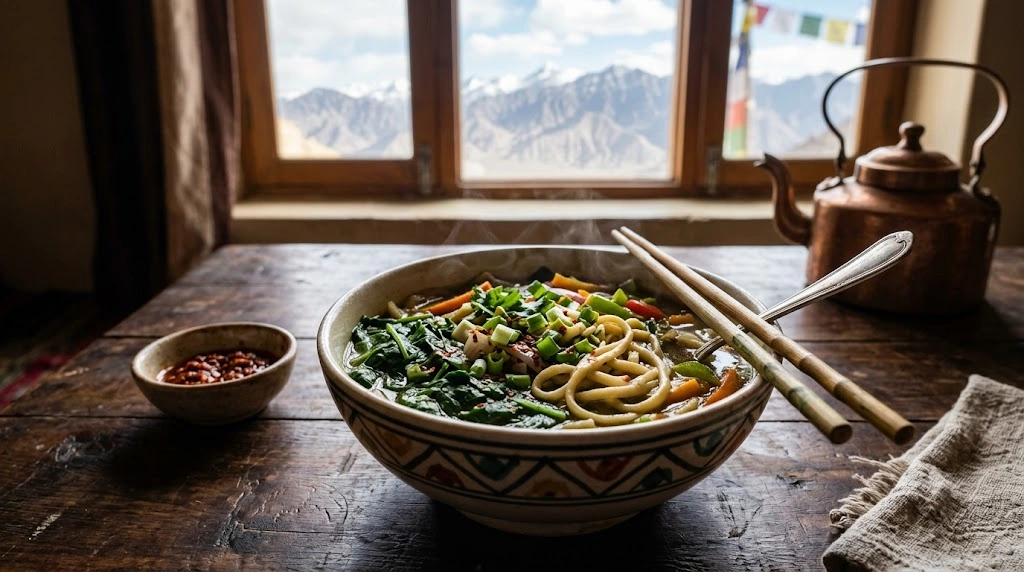
In recent years, Spinach Thukpa has become a modern healthy twist on the traditional thukpa, adding leafy greens to boost its nutritional value while maintaining its authentic Himalayan taste.
What is Spinach Thukpa?
Spinach Thukpa is a noodle-based soup enriched with vegetables, spices, broth, and fresh spinach leaves. It is a variation of the traditional Himalayan thukpa, which typically includes meat or vegetables, noodles, and a light but flavorful soup base.

 6°C
6°C
- Temperature
- Rain Chance
- Wind


Taste and Characteristics
- Light yet deeply flavorful broth
- Mildly spiced with garlic, ginger, and local Himalayan seasonings
- Earthy freshness from spinach
- Soft noodles soaked in aromatic soup
- Balanced between comfort food and healthy eating
The addition of spinach not only enhances the flavor but also adds vitamins, iron, and antioxidants, making it a wholesome meal.
Origin and History
Thukpa originated in Tibet and gradually spread across the Himalayan belt through cultural exchange and migration. Traditionally, it was a meat-based noodle soup consumed by nomadic communities and monks living in cold high-altitude regions.
As the dish traveled to Nepal, Bhutan, Sikkim, and Ladakh, it evolved into various local forms depending on available ingredients and dietary habits. In vegetarian-friendly regions, spinach, cabbage, and other greens became popular additions.
Spinach Thukpa is a more recent adaptation influenced by modern healthy eating trends, especially in urban Himalayan communities and Indian cities where people prefer nutrient-rich vegetarian meals.
Ingredients
Main Ingredients Used
Spinach Thukpa uses simple, wholesome ingredients:
- Wheat or rice noodles
- Fresh spinach leaves (washed and chopped)
- Onion, garlic, and ginger
- Tomatoes or tomato paste
- Carrots, cabbage, or bell peppers (optional vegetables)
- Vegetable stock or water
- Soy sauce or Himalayan salt
- Black pepper
- Green chilies (optional for spice)
- Fresh coriander leaves
- A small amount of oil (mustard or vegetable oil)
These ingredients combine to create a balanced dish that is both comforting and nutrient-dense.
How It Is Prepared
The preparation of Spinach Thukpa is simple and follows a one-pot soup method.
First, garlic, ginger, and onions are sautéed in oil until aromatic. Then chopped vegetables like carrots and cabbage are added and lightly cooked. Tomatoes are mixed in to create a slightly tangy base.
Next, water or vegetable stock is poured in, and the mixture is brought to a gentle boil. Once the broth develops flavor, noodles are added and cooked until soft.
Finally, fresh spinach leaves are stirred in just before serving to retain their color and nutrients. The soup is garnished with coriander and sometimes a dash of chili oil or pepper for extra heat.
Variations
Spinach Thukpa has several interesting variations across regions:
1. Tibetan Style
The traditional version is more broth-heavy with fewer vegetables and a lighter seasoning profile.
2. Nepali Thukpa
Often spicier and richer, sometimes including meat or egg noodles.
3. Indian Himalayan Style
Popular in Ladakh, Sikkim, and Himachal Pradesh, this version is often vegetarian and includes local greens like spinach, bok choy, or mustard leaves.
4. Modern Healthy Version
Found in urban cafes, this version emphasizes organic vegetables, whole wheat noodles, and reduced oil content.
Why You Should Try It
Spinach Thukpa is more than just a soup—it is a complete meal in a bowl. Here’s why it stands out:
- Highly nutritious: Packed with iron, fiber, and vitamins from spinach
- Comforting: Perfect for cold weather or when you need a light but filling meal
- Easy to digest: Light broth makes it suitable for all age groups
- Cultural richness: Reflects Himalayan food traditions and mountain lifestyle
- Customizable: Can be made vegan, spicy, or protein-rich depending on preference
Its combination of health and taste makes it a favorite among both traditional food lovers and modern health-conscious eaters.
Where to Try It
Spinach Thukpa is widely available in Himalayan regions and beyond:
- Ladakh (Leh): Local cafes and Tibetan eateries serve authentic versions
- Sikkim (Gangtok): Popular in street food stalls and small restaurants
- Darjeeling: Known for Tibetan-Nepali fusion cuisine
- Nepal (Kathmandu): Traditional thukpa shops in Thamel area
- Bhutan (Thimphu): Served in local eateries with a Bhutanese touch
- Indian metro cities: Tibetan cafés and Himalayan cuisine restaurants in Delhi, Mumbai, and Bengaluru also feature it
FAQs
1. Is Spinach Thukpa vegetarian?
Yes, it is commonly vegetarian, especially in modern and Indian Himalayan versions.
2. Can I make it vegan?
Absolutely. Simply use vegetable stock and avoid egg noodles or animal-based broth.
3. Is Spinach Thukpa spicy?
It is mildly spicy by default, but spice levels can be adjusted easily.
4. What noodles are best for Thukpa?
Wheat noodles are traditional, but rice noodles or egg noodles can also be used.
5. Is Spinach Thukpa healthy?
Yes, it is rich in vegetables, fiber, and nutrients, making it a balanced meal.
6. Can I store Spinach Thukpa?
It is best eaten fresh, but the broth can be stored separately for up to 1–2 days.
Conclusion
Spinach Thukpa is a heartwarming Himalayan noodle soup that blends tradition with modern nutrition. Its simple ingredients, soothing flavors, and nourishing qualities make it a perfect dish for anyone seeking comfort food with a healthy twist.
Whether enjoyed in the snowy valleys of Ladakh or recreated at home, Spinach Thukpa delivers warmth, culture, and wellness in every spoonful.