

Introduction
The Traditional Ladakhi Feast (Losar Cuisine) is one of the most culturally rich and symbolic food traditions of Ladakh, a high-altitude region in the Indian Himalayas. Closely associated with the celebration of Losar, the Ladakhi New Year, this feast reflects centuries-old Tibetan-Buddhist influences blended with local Ladakhi mountain life.
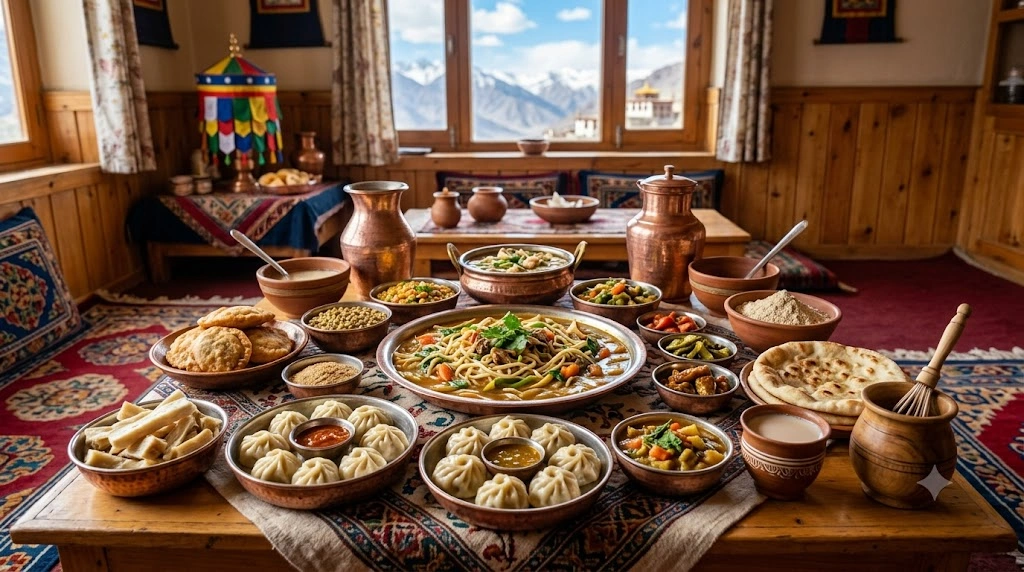
During Losar, families prepare elaborate meals that bring together warmth, community bonding, and spiritual renewal in the harsh winter climate. The cuisine is not just about food—it represents gratitude, prosperity, and the hope for a fruitful year ahead. Today, the Traditional Ladakhi Feast (Losar Cuisine) is gaining global attention as travelers explore authentic Himalayan food culture.
What is Traditional Ladakhi Feast (Losar Cuisine)?
The Traditional Ladakhi Feast (Losar Cuisine) is a festive spread prepared during Losar celebrations in Ladakh. It typically includes a variety of hearty, warming dishes made from locally available ingredients such as barley, wheat, yak meat, dairy products, and dried vegetables.

 6°C
6°C
- Temperature
- Rain Chance
- Wind


The feast is known for its balance of flavors—mildly salty, buttery, and earthy—with a focus on nourishment rather than spice. Since Ladakh has a cold desert climate, the dishes are designed to provide energy and warmth.
Culturally, the feast symbolizes unity and abundance. Families cook together, share food with neighbors, and offer prayers before eating, making it both a culinary and spiritual experience.
Origin and History
The roots of the Traditional Ladakhi Feast (Losar Cuisine) trace back to Tibetan Buddhist traditions that spread into Ladakh centuries ago. Losar itself originates from the Tibetan lunar calendar and marks the beginning of the new year.
Historically, Ladakh’s isolation and harsh climate shaped its cuisine. People relied on barley (tsampa), yak products, and preserved foods that could survive long winters. Over time, these practical food habits evolved into ceremonial dishes prepared during Losar.
Monastic influence also plays a key role. Buddhist rituals performed during the festival are often followed by communal feasts, where food is offered first to deities and monks before being shared among families.
Ingredients
The Traditional Ladakhi Feast (Losar Cuisine) uses simple yet highly nutritious ingredients:
Main Ingredients:
- Barley flour (Tsampa)
- Wheat flour
- Yak meat or mutton
- Butter (often yak butter)
- Milk and fermented dairy products
- Green leafy vegetables (seasonal or dried)
- Root vegetables like turnips and potatoes
- Salt and mild spices
These ingredients reflect the resourcefulness of Ladakhi people, who rely on local and preserved foods due to limited agriculture.
How It Is Prepared
Preparation of the Traditional Ladakhi Feast (Losar Cuisine) is a community-driven process.
Barley flour is often roasted and kneaded into dough to make staples like khambir (traditional bread) or dumpling-like dishes. Meat is slow-cooked in large pots to create rich, warming stews. Butter tea, known as gur gur chai, is churned using tea leaves, salt, and yak butter until creamy and energizing.
Dried vegetables are soaked and cooked into soups, while sweet treats are prepared using wheat flour, sugar, and butter. Most dishes are cooked in large quantities, as families often host guests and neighbors during Losar.
Before eating, offerings are made at household altars, reflecting the spiritual significance of the meal.
Variations
The Traditional Ladakhi Feast (Losar Cuisine) varies across regions and modern adaptations:
Regional Variations:
- Leh region: More influence from Tibetan cuisine, with frequent use of momos and thukpa
- Nubra Valley: Heavier reliance on dairy and yak-based dishes
- Changthang region: More meat-based preparations due to nomadic lifestyle
Modern Variations:
- Vegetarian Losar feasts using paneer and lentils instead of meat
- Health-conscious versions with reduced butter
- Restaurant-style Ladakhi thalis for tourists
- Fusion dishes combining Ladakhi and North Indian flavors
Despite these changes, the essence of celebration remains intact.
Why You Should Try It
Trying the Traditional Ladakhi Feast (Losar Cuisine) is more than a culinary experience—it is cultural immersion.
The flavors are subtle yet deeply satisfying, offering a contrast to heavily spiced Indian cuisines. The use of butter, barley, and slow-cooked meats creates a comforting, earthy taste perfect for cold climates.
Beyond taste, the feast offers insight into Ladakhi traditions, Buddhist rituals, and community living. It is a rare opportunity to experience food as a form of storytelling, spirituality, and heritage.
For travelers, it is one of the most authentic ways to understand life in the Himalayas.
Where to Try It
You can experience the Traditional Ladakhi Feast (Losar Cuisine) primarily in Ladakh during the Losar festival period, usually between January and February.
Best Places:
- Leh, Ladakh – Local homestays and family-run kitchens
- Nubra Valley – Traditional villages offering authentic meals
- Monasteries in Ladakh – Special communal feasts during festival events
- Local restaurants in Leh Market – Seasonal Losar specials for visitors
Homestays are especially recommended, as they offer the most authentic and traditional experience of the feast.
FAQs
1. What is the Traditional Ladakhi Feast (Losar Cuisine)?
It is a festive meal prepared during Losar, the Ladakhi New Year, featuring barley-based dishes, meat stews, and dairy products.
2. When is Losar celebrated?
Losar is usually celebrated between January and February, depending on the Tibetan lunar calendar.
3. Is the feast vegetarian-friendly?
Yes, many modern versions include vegetarian dishes made with vegetables, lentils, and dairy.
4. What makes Ladakhi cuisine unique?
Its use of barley, yak products, and butter-based dishes tailored for high-altitude living makes it distinct.
5. Can tourists experience Losar food?
Yes, tourists can enjoy it in homestays, monasteries, and local restaurants in Ladakh during the festival.
6. Is the food very spicy?
No, Ladakhi cuisine is generally mild, focusing on warmth and nourishment rather than heat.
Conclusion
The Traditional Ladakhi Feast (Losar Cuisine) is a beautiful reflection of Ladakh’s culture, climate, and spiritual life. More than just a festive meal, it represents unity, gratitude, and the hope of a prosperous new year.
From hearty barley bread to comforting butter tea and slow-cooked stews, every dish tells a story of resilience and tradition in one of the world’s most extreme landscapes. For anyone interested in authentic Himalayan culture, this feast is an unforgettable culinary journey worth experiencing at least once in a lifetime.