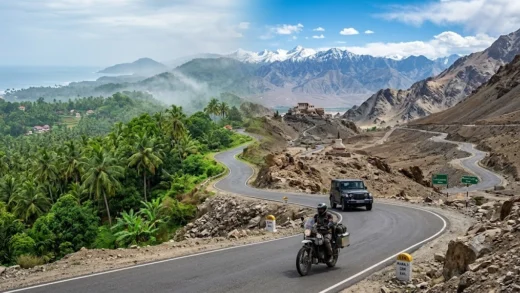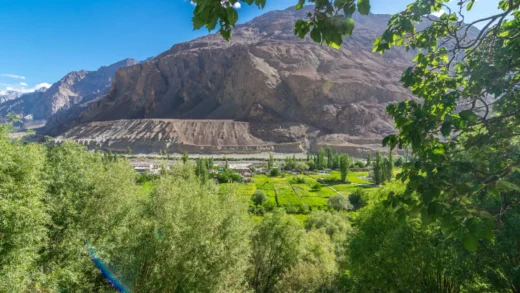


Choglamsar, also spelt Chuglamsar, is a census town in the Leh district of Ladakh, India. It is located on the bank of the Indus River. Located about 8 km southeast of Leh along the banks of the mighty Indus River, it serves as a cultural, educational, and commercial hub for the surrounding region.
Choglamsar Town
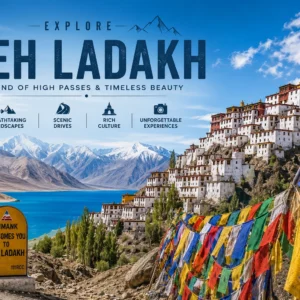
Choglamsar, a picturesque village located just a short drive from Leh, is a captivating blend of stunning landscapes and rich cultural heritage. Nestled along the banks of the Indus River, this vibrant community is known for its breathtaking views of the surrounding mountains and serene atmosphere.
| Particulars | Details |
|---|---|
| Location | Southeast of Leh, Ladakh |
| Distance from Leh | Approx. 8 km |
| Elevation | Around 3,500 m (11,500 ft) |
| Population | 10,754 (2011 Census) |
| River | Indus River |
| PIN Code | 194101 |
| Administrative Status | Census Town |
| Main Languages | Ladakhi, Tibetan, Hindi, English |
Located very close to Leh, Choglamsar is a hidden gem that is known for beautiful landscapes, great adventure activities and also, cultural experiences.

 12°C
12°C
- Temperature
- Rain Chance
- Wind



Whether you are a culture enthusiast, a thrill-seeker or a just want to unwind yourself, you should make a plan to visit Chuglamsar.
Must-visit place to have a unique experience. It is the main hub for all those who want to explore Ladakh. If you love to enjoy the beauty of Ladakh with clear blue sky and snow capped peaks, then you should make a plan to visit Choglamsar Leh.
About Choglamsar
Choglamsar is known for its strong Tibetan cultural influence and is home to one of the largest Tibetan settlements in Ladakh. The town developed into an important center for education, handicrafts, agriculture, and Buddhist studies. Visitors often pass through Choglamsar while traveling between Leh and destinations in eastern Ladakh.
Central Institute of Buddhist Studies
One of the town’s most significant landmarks is the Central Institute of Buddhist Studies, a prestigious institution established in 1959 and later granted deemed university status. It attracts students and researchers from across the Himalayan region.
The Central Institute of Buddhist Studies, formerly known as the School of Buddhist Philosophy, located in Leh town of Ladakh is a deemed university under Ministry of Culture.
Key Highlights
- Its proximity to Leh and the Leh–Manali highway.
- A significant Tibetan refugee settlement and strong Tibetan cultural influence.
- The Central Institute of Buddhist Studies, an important center for Buddhist learning.
- Scenic views of the Indus Valley and surrounding Himalayan landscapes.
- Traditional Ladakhi and Tibetan arts, crafts, and cultural heritage.
Landscape & Environment
Situated in the fertile Indus Valley, Choglamsar offers a contrast to Ladakh’s barren mountains. The town features:
- Green agricultural fields
- Willow and poplar plantations
- Indus River scenery
- Traditional Ladakhi villages
- Snow-capped Himalayan backdrops
The area was significantly affected during the 2010 Ladakh cloudburst and floods but has since been rebuilt and developed further.
Key Attractions
- Central Institute of Buddhist Studies
- Tibetan Settlement Area
- Indus River viewpoints
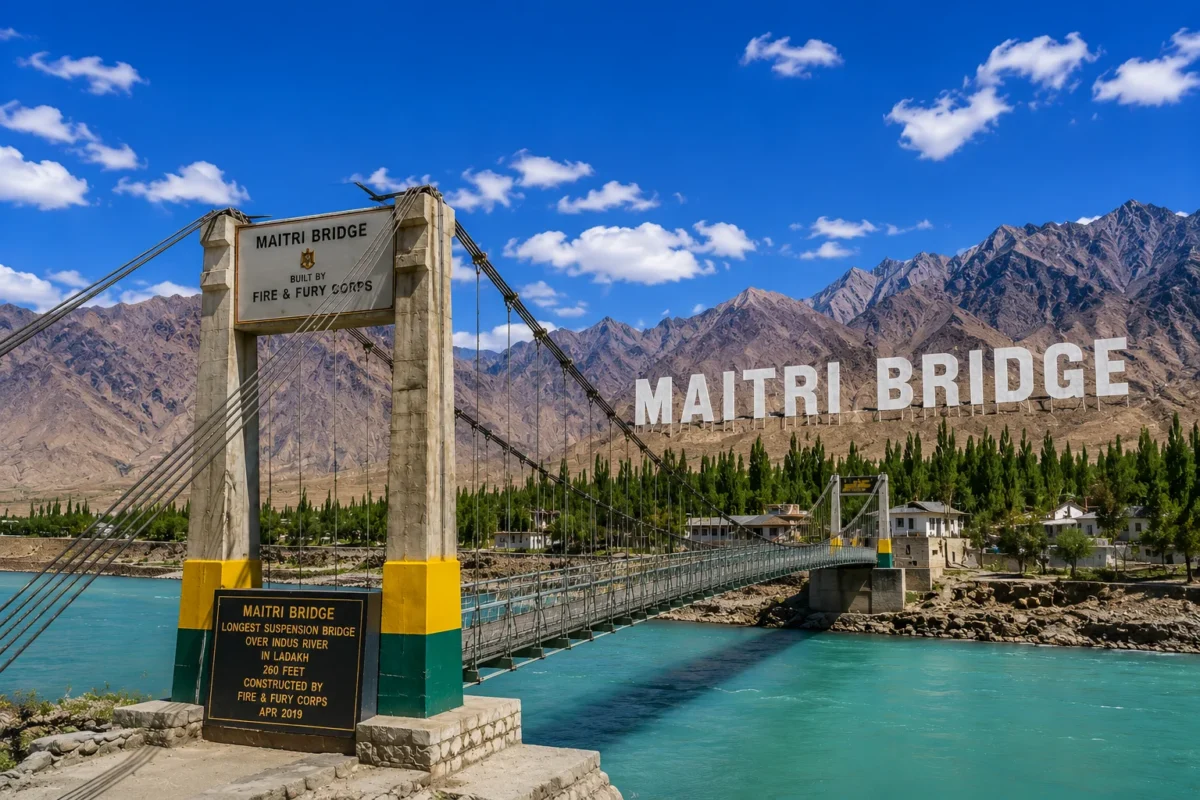
- Maitri Suspension Bridge
- Traditional handicraft centers
- Polo Ground and Golf Links
Choglamsar Bridge
The Choglamsar Bridge over the Indus River connects the town to Chuchat Yakma, the site of an Imambara. In 2019, the Indian Army built a suspension bridge in 40 days, connecting Choglamsar to Chuchat Yakma and Stok. Named Maitri Bridge, it is the longest suspension bridge built over the Indus River.
| Particulars | Details |
|---|---|
| Name | Maitri Bridge |
| Location | Choglamsar, Leh District, Ladakh |
| River | Indus River |
| Length | 260 feet (79 m) |
| Type | Cable Suspension Bridge |
| Year Opened | 2019 |
| Built By | Fire and Fury Corps, Indian Army |
| Construction Time | 40 Days |
| Significance | Longest suspension bridge over the Indus River in Ladakh |
The 260-foot Maitri Bridge in Choglamsar, Leh, is a strategic cable-suspension bridge built by the Indian Army in 40 days. It dramatically improves connectivity for the largest villages in the region by linking Choglamsar to Chuchat Yakma and Stok.
Importance of the Bridge
- Connects Choglamsar, Stok, and Chuchot, improving local transportation and accessibility.
- Enhances connectivity for residents, students, farmers, and tourists.
- Symbolizes strong civil-military cooperation in Ladakh.
- Named “Maitri” (Friendship) to represent friendship and solidarity between local communities and the Indian Army.
Lesser-Known Facts About Choglamsar
1. Choglamsar Has One of the Highest Literacy Rates in Ladakh
According to the 2011 Census, Choglamsar recorded an impressive literacy rate of about 98.5%, making it one of the most educated settlements in the region.
2. It Hosts Ladakh’s Premier Buddhist University
The town is home to the Central Institute of Buddhist Studies, founded in 1959. The institute was established after Ladakhi monks could no longer travel to Tibet for higher Buddhist education and later became a deemed university.
3. A Large Tibetan Settlement Exists Here
Choglamsar is one of the most important Tibetan refugee settlements in Ladakh. The area preserves Tibetan traditions through monasteries, handicrafts, schools, and cultural institutions.
4. The Longest Suspension Bridge Over the Indus Is Nearby
The Maitri Bridge, constructed by the Indian Army in 2019, connects Choglamsar with nearby settlements across the Indus River. It is recognized as the longest suspension bridge built over the Indus in Ladakh.
5. Choglamsar Was Severely Affected by the 2010 Cloudburst
The devastating 2010 Ladakh flash floods caused major damage in Choglamsar. Many homes, roads, and public facilities were impacted, and the town became one of the worst-affected areas during the disaster.
6. It Is More Than Just a Residential Town
Besides being a gateway to Leh, Choglamsar has golf links, a polo ground, horticultural nurseries, handicraft centers, and educational institutions, making it one of Ladakh’s most diversified settlements.
7. The Name “Choglamsar” Has Buddhist Roots
The name is believed to derive from Tibetan words associated with a “garden of dharma” or “religious enclosure,” reflecting the area’s long connection with Buddhist learning and culture. Its identity remains closely linked to Ladakh’s spiritual heritage.
Did You Know?
Many travelers pass through Choglamsar on their way to Leh without realizing that it is one of Ladakh’s most important centers for Tibetan culture, Buddhist education, and post-1959 Himalayan history.
MyTrip Experience with Choglamsar
I visited Choglamsar Village during my trip to Ladakh. One of the most interesting things I saw was the beautiful Indus River flowing beside the village. The peaceful river, green fields, and mountain views made the place look very scenic.
I was also happy to see local people carrying out their daily activities and children playing in the village. Watching the traditional Ladakhi lifestyle gave me a better understanding of the local culture. The prayer flags fluttering in the wind and the nearby monasteries added to the village’s charm.
My visit to Choglamsar Village was a unique experience. It was interesting to see how people live in harmony with nature while preserving their traditions and culture.
Why Visit Choglamsar?
Choglamsar offers visitors an opportunity to experience Ladakhi and Tibetan culture beyond the busy streets of Leh. Its monasteries, educational institutions, riverside landscapes, and traditional settlements make it a fascinating stop for travelers interested in culture, history, and local life.
Hospitals & Healthcare Facilities in Choglamsar
| Hospital / Healthcare Facility | Type | Description |
|---|---|---|
| LHF Hospital | Hospital | A prominent healthcare facility associated with the Ladakh Heart Foundation, providing general medical services and cardiac care support to residents and visitors. |
| ITBP FTR Hospital Ladakh | Hospital | Operated by the Indo-Tibetan Border Police (ITBP), offering emergency care, primary healthcare services, and medical support for personnel and local communities. |
| 153 General Hospital, Leh | Multi-Specialty Hospital | A major referral hospital near Leh providing specialist consultations, diagnostics, emergency treatment, and advanced medical care. |
| Sonam Norboo Memorial (SNM) Hospital | District Hospital | The largest government hospital in the Leh district, offering comprehensive healthcare services, specialist departments, emergency care, and diagnostic facilities. |
ATMs & Banking Services in Choglamsar
| ATM / Banking Facility | Type | Location | Operating Hours |
|---|---|---|---|
| HDFC Bank ATM | ATM | Ground Floor, Zampa Main Road, Choglamsar | Open 24 Hours |
| Punjab National Bank ATM | ATM | Zamsna Complex, near the local Mosque | Open 24 Hours |
| SBI ATM | ATM | Main Leh Road, Choglamsar | Open 24 Hours |
| Punjab National Bank ATM | ATM | Indus Complex, Choglamsar–Stakna Road | Daily, 6:00 AM – 10:00 PM |
| J&K Bank ATM | ATM | Ground Floor, near Police Line, Choglamsar | Monday–Saturday, 10:00 AM – 5:00 PM (Closed Sundays) |
Post office
Choglamsar Post office is the central postal hub handling local mail, parcel services, and basic postal banking solutions.
“Shifted from main choglamsar market to nearby Ladakh buddhist association parking jivetsal (Behind karma pa minastery) road”
“Choglamsar Post office shifted to Mahabodhi Meditation Road, opposite Zhewaitsel”
- Located right on NH 3 for direct accessibility.
- Standard operating hours are typically Monday through Friday from 10:00 AM to 4:00 PM (Closed Saturdays and Sundays).
Choglamsar Market
Choglamsar Market is a small market offering a variety of groceries, fruits, vegetables, and shops like chemists. Visitors can explore Tibetan street food near Choglamsar.
- Choglamsar Market serves as the second largest commercial area after Leh Market.
- Travelers describe it as a compact yet authentic place to experience Ladakhi daily culture.
- Parking can be difficult due to narrow lanes, so walking or shared transport is advised.
- Weekdays tend to be livelier with more local patrons, while weekends bring in tourists exploring the area’s mix of commerce and culture.
SBI ATM in Choglamsar
Best Time to Visit Choglamsar
The best time to visit Choglamsar is from May to September, when the weather is pleasant, roads are fully accessible, and outdoor activities can be enjoyed comfortably.
| Season | Months | Temperature | Travel Experience |
|---|---|---|---|
| Summer | May – June | 10°C to 25°C | Ideal for sightseeing, photography, and cultural visits |
| Peak Tourist Season | July – August | 15°C to 30°C | Best weather, vibrant local life, and easy road access |
| Autumn | September – October | 5°C to 20°C | Clear skies, fewer tourists, excellent landscapes |
| Winter | November – April | -15°C to 10°C | Very cold, suitable for winter photography and local experiences |
Why Visit During Summer?
- Pleasant daytime temperatures for exploring the Indus Valley.
- Comfortable conditions for visiting the Tibetan settlement and educational institutions.
- Easy access from Leh and nearby attractions.
- Clear mountain views and green agricultural fields.
- Opportunity to experience local festivals and cultural events.
Best Month for Photography
September is often considered the best month for photography. The monsoon has little effect in Ladakh, the skies remain crystal clear, and the surrounding mountains display stunning shades of gold and brown.
Best Time for Cultural Experiences
Visit between June and September to experience:
- Traditional Ladakhi village life
- Tibetan cultural activities
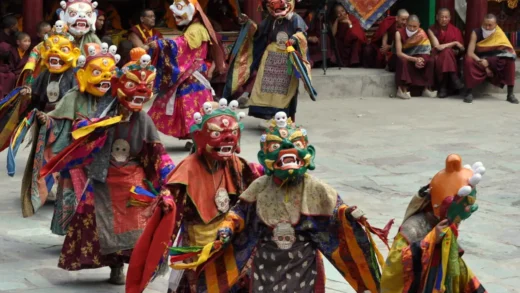
- Buddhist ceremonies and monastery events
- Local markets and handicraft centers
Travel Tip
Since Choglamsar is located at an altitude of approximately 3,500 meters (11,500 feet), visitors should spend a day acclimatizing in Leh or Choglamsar before undertaking strenuous activities. This helps reduce the risk of altitude sickness.