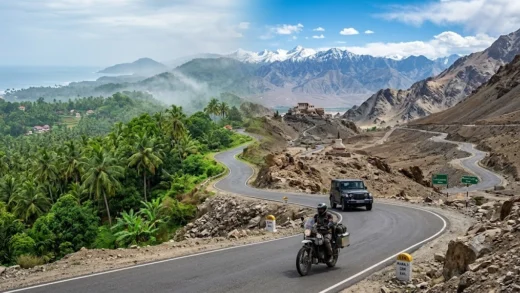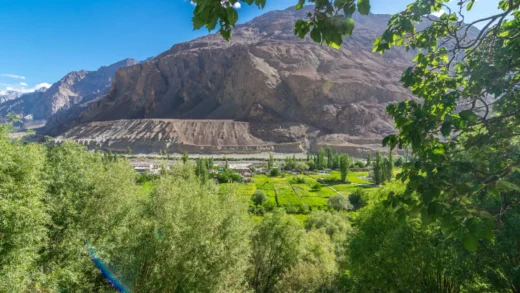


Sham Valley: The Apricot Valley is a popular nickname for the fertile Sham Valley, a scenic region west of Leh known for its thousands of apricot trees, traditional villages, and rich agricultural heritage. Ladakh is India’s largest producer of high-quality apricots, and Sham Valley is at the heart of this cultivation.
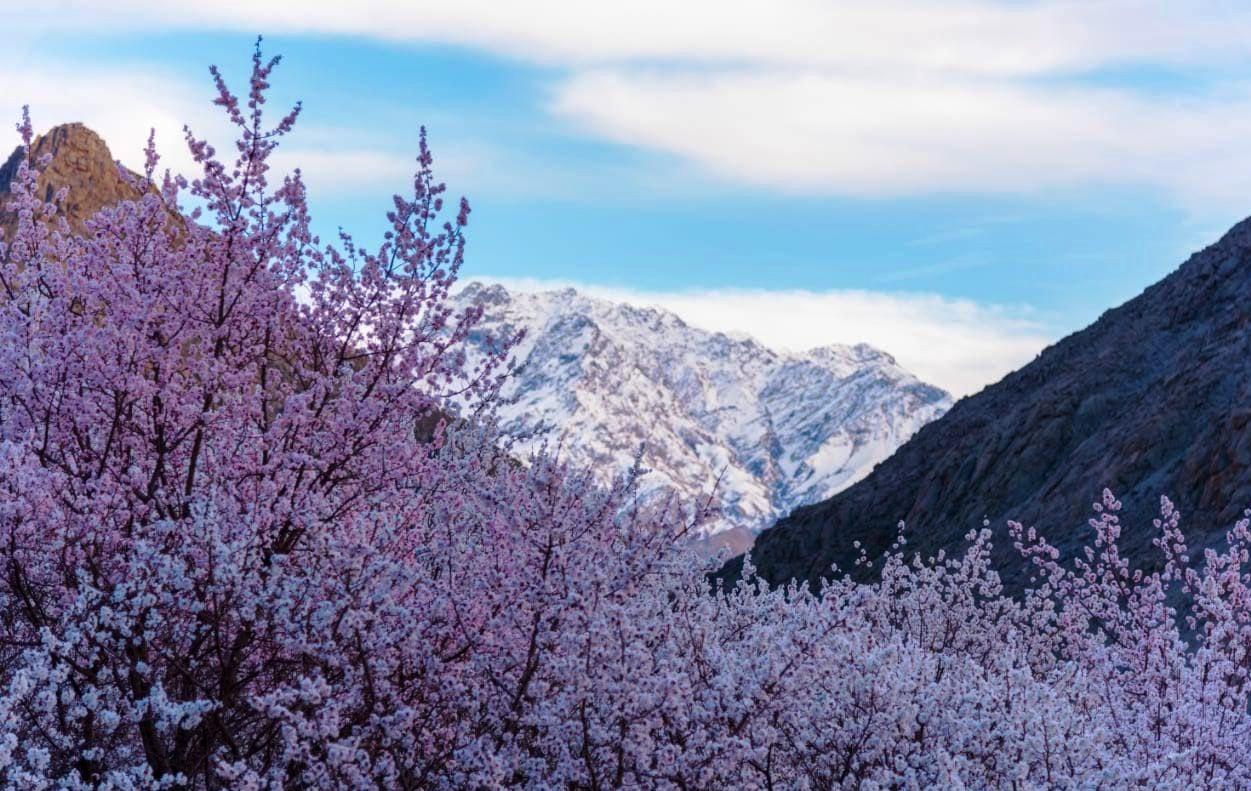
Apricot is region’s main crop. For this reason the valley is called as ‘Apricot valley’.
Quick Facts
| Feature | Details |
|---|---|
| Location | Sham Valley, Ladakh |
| Distance from Leh | 60–90 km (depending on the village) |
| Best Time for Blossoms | Late March to April |
| Best Time for Fresh Apricots | July to September |
| Famous For | Apricot orchards, dried apricots, apricot oil, village tourism |
- Sham Valley, popularly known as the “Apricot Valley,” is a picturesque Himalayan valley in Ladakh.
- It is situated along the Indus River and the NH1 (Srinagar–Kargil–Leh National Highway).
- The valley lies in the Sham region of the Union Territory of Ladakh, India.
- It is located approximately 170 km from Kargil.
- It is about 180 km from Leh, the capital of Ladakh.
- Sham Valley is renowned for its lush apricot orchards, traditional Ladakhi villages, ancient monasteries, and scenic landscapes.
- The region is one of the best places in Ladakh to experience rural tourism, local culture, and apricot blossom season during spring.
Villages of Sham Valley
Alchi, Bazgoo, Giramangu, Lamayouro, Likir, Saspochey, Suspol, Hemis Shukpachan, Tingmosgang, Uleytokpo, Yangthang, Khaltsi, Skurbuchan, Nurla, Domkhar, Wanla, Takmachik, Skindiyang, Rizong, Henistok

 -0°C
-0°C
- Temperature
- Rain Chance
- Wind



Popular Apricot Villages
| Village | Highlights |
|---|---|
| Alchi | Apricot orchards, ancient monastery |
| Saspol | Large apricot farms and scenic landscapes |
| Likir | Traditional villages and monastery |
| Basgo | Historic fort and apricot plantations |
| Hemis Shukpachan | Green village with orchards and trekking |
Popular Attractions in Sham Valley (Apricot Valley), Ladakh
Sham Valley is one of the most scenic regions in western Ladakh, stretching along the Indus River between Leh and Lamayuru. It is famous for ancient monasteries, apricot orchards, unique landscapes, and easy sightseeing routes.
| Attraction | Highlights | Distance from Leh (Approx) |
|---|---|---|
| Magnetic Hill | Gravity hill optical illusion and popular photo stop | 30 km |
| Gurudwara Pathar Sahib | Sacred Sikh shrine dedicated to Guru Nanak | 27 km |
| Indus–Zanskar Confluence | Spectacular meeting point of the Indus and Zanskar rivers | 35 km |
| Basgo Monastery | Historic monastery and ancient mud fort ruins | 40 km |
| Likir Monastery | Famous 25-metre Maitreya Buddha statue | 52 km |
| Alchi Monastery | 11th-century monastery renowned for ancient murals | 67 km |
| Saspol Caves | Rock-cut meditation caves with Buddhist paintings | 60 km |
| Mangyu Temple Complex | Ancient temples featuring exquisite Buddhist art | 70 km |
| Rizong Monastery | Peaceful monastery known as the “Paradise for Meditation” | 75 km |
| Uleytokpo | Riverside village, camping, birdwatching, and trekking | 70 km |
| Tingmosgang | Historic village with palace ruins and apricot orchards | 85 km |
| Lamayuru Monastery | One of Ladakh’s oldest monasteries and the famous Moonland landscape | 125 km |
Things to Do
- Walk through blooming apricot orchards.
- Taste fresh, sun-dried, and organic apricots.
- Buy cold-pressed apricot kernel oil.
- Visit traditional Ladakhi villages.
- Enjoy photography during the blossom season.
- Stay in a local homestay for an authentic experience.
Best Time to Visit
- March–April: Apricot blossoms transform the valley into a sea of white and pink flowers.
- July–September: Fresh apricots are harvested, making it the best season for fruit lovers.
How to Reach
- From Leh: Around 1.5–2.5 hours by road via the Srinagar–Leh Highway.
- The valley is easily accessible by taxi, rented bike, or self-drive vehicle.
The Apricot Valley offers one of Ladakh’s most picturesque rural experiences, combining stunning landscapes, cultural heritage, and some of the finest apricots produced in the Himalayas.