

The Union Territory of Ladakh now consists of seven districts following the creation of five new districts on 27 April 2026. The administrative restructuring increased the number of districts from two to seven to improve governance and service delivery in remote regions.
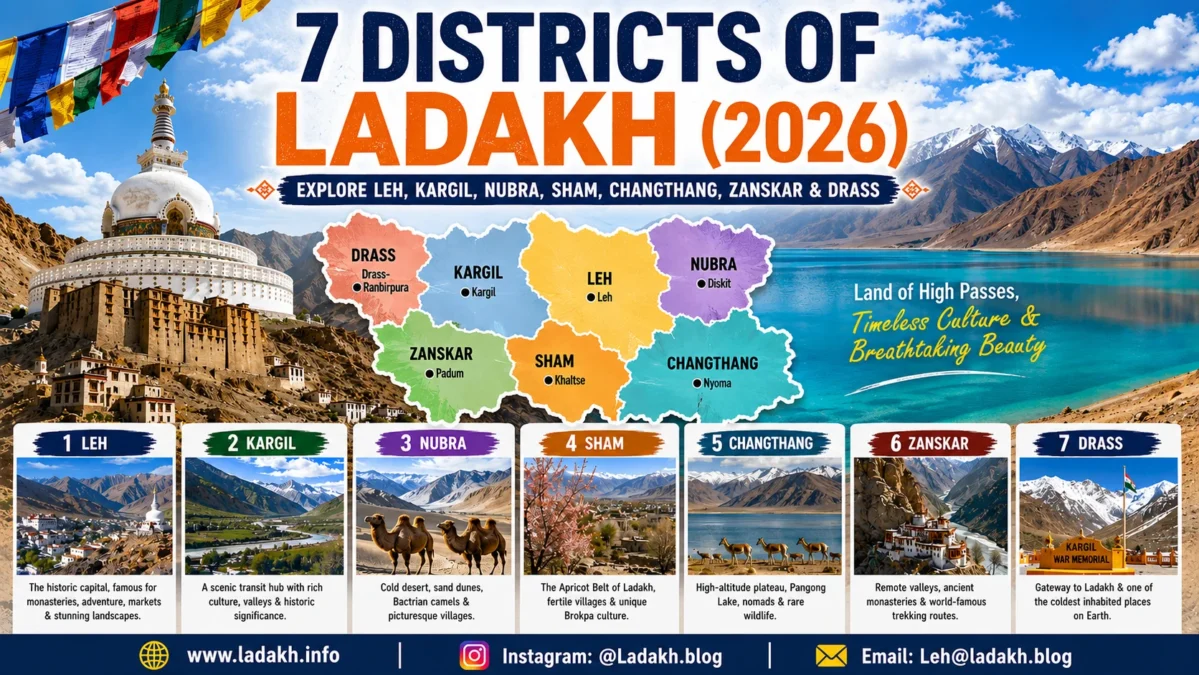
Districts of Ladakh
| District | Headquarters | Key Highlights |
|---|---|---|
| Leh | Leh | Largest district, historic capital region, monasteries, culture, and adventure tourism. |
| Kargil | Kargil | Important transit hub, mountain landscapes, and historical significance from the 1999 Kargil War. |
| Nubra | Diskit | Famous for Nubra Valley, sand dunes, Bactrian camels, and high-altitude desert scenery. |
| Sham | Khaltse | Known as Ladakh’s Apricot Belt and home to the unique Brokpa culture. |
| Changthang | Nyoma | High-altitude plateau, Changpa nomads, Pangong Lake, and wildlife habitats. |
| Zanskar | Padum | Remote valley known for trekking, frozen river expeditions, and Buddhist heritage. |
| Drass | Drass-Ranbirpura | Gateway to Ladakh and one of the coldest inhabited places in the world. |
Administrative Reorganization
The five newly created districts were carved out as follows:
- From Leh District: Nubra, Sham, and Changthang
- From Kargil District: Zanskar and Drass
This reorganization was officially notified by the Administration of Ladakh in April 2026.

 12°C
12°C
- Temperature
- Rain Chance
- Wind



Official Information
For government services, notifications, and tourism information, visit: https://ladakh.gov.in/. This portal provides district administration details, citizen services, tourism updates, and official announcements.
7 Districts of Ladakh
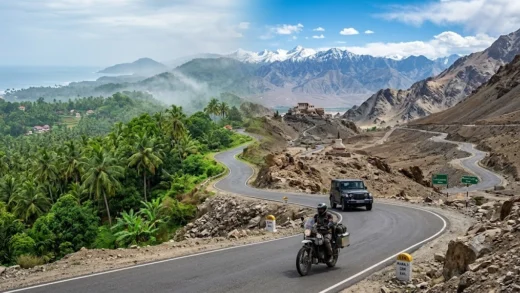
Ladakh, India’s northernmost Union Territory, is divided into seven districts. Each district offers unique landscapes, culture, attractions, and travel experiences ranging from high-altitude lakes and remote valleys to ancient monasteries and cold deserts.
1. Leh District
About Leh District
Leh District is the largest and most visited district in Ladakh. Serving as the administrative headquarters of the Union Territory, it is famous for its breathtaking mountain scenery, ancient Buddhist monasteries, vibrant markets, and adventure tourism.
Top Attractions in Leh District
- Leh Palace
- Shanti Stupa
- Thiksey Monastery
- Hemis Monastery
- Khardung La
- Magnetic Hill
Why Visit Leh?
Leh is the gateway to Ladakh and offers a perfect blend of culture, history, adventure, and stunning Himalayan landscapes.
2. Kargil District
About Kargil District
Kargil District is known for its rugged mountains, historic significance, and rich cultural heritage. Located on the Srinagar-Leh Highway, Kargil serves as an important transit and commercial center.
Top Attractions in Kargil District
- Kargil War Memorial
- Suru Valley
- Mulbekh Monastery
- Sankoo Valley
- Pensi La
Why Visit Kargil?
Kargil offers spectacular valleys, cultural diversity, and some of Ladakh’s most beautiful offbeat destinations.
3. Nubra District
About Nubra District
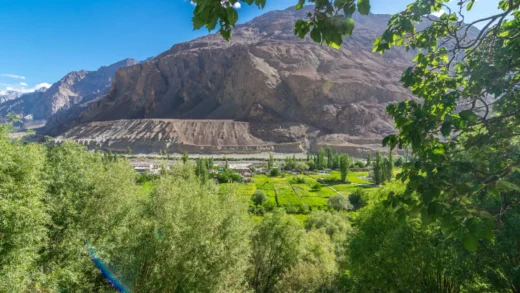
Created in 2026, Nubra District is home to the world-famous Nubra Valley. The district features unique cold desert landscapes, sand dunes, and traditional villages surrounded by snow-capped mountains.
Top Attractions in Nubra District
Why Visit Nubra?
Visitors can experience double-humped Bactrian camels, beautiful valleys, and some of the most scenic roads in India.
4. Sham District
About Sham District
Sham District, headquartered in Khaltse, is often called the Apricot Belt of Ladakh. The region is famous for fertile villages, apricot orchards, and the unique culture of the Brokpa community.
Top Attractions in Sham District
- Khaltse
- Alchi Village
- Alchi Monastery
- Lamayuru
- Apricot Orchards
- Brokpa Villages
Why Visit Sham?
The district offers cultural experiences, scenic villages, and some of Ladakh’s most fertile landscapes.
5. Changthang District
About Changthang District
Changthang District covers a vast high-altitude plateau in eastern Ladakh. It is home to nomadic Changpa herders, rare wildlife, and some of the world’s most beautiful alpine lakes.
Top Attractions in Changthang District
- Pangong Lake
- Tso Moriri
- Hanle
- Nyoma
- Changthang Wildlife Sanctuary
Why Visit Changthang?
Changthang offers unmatched landscapes, stargazing opportunities, wildlife sightings, and authentic nomadic culture.
6. Zanskar District
About Zanskar District
Zanskar District is one of the most remote regions in the Himalayas. Surrounded by towering peaks, it is famous for trekking routes, frozen rivers, monasteries, and untouched natural beauty.
Top Attractions in Zanskar District
- Padum
- Phugtal Monastery
- Karsha Monastery
- Zanskar Valley
- Chadar Trek Route
Why Visit Zanskar?
Adventure seekers and trekkers visit Zanskar for its dramatic landscapes and remote Himalayan experiences.
7. Drass District
About Drass District
Drass District is known as the Gateway to Ladakh and is one of the coldest inhabited regions on Earth. The district gained worldwide recognition during the Kargil War.
Top Attractions in Drass District
- Kargil War Memorial
- Tiger Hill Viewpoint
- Tololing
- Mushkoh Valley
- Drass Valley
Why Visit Drass?
Visitors can explore war history, mountain scenery, and experience one of the coldest inhabited places in the world.
Why the New Districts Matter
The creation of Nubra, Sham, Changthang, Zanskar, and Drass as separate districts improves governance, infrastructure development, tourism management, and public service delivery across Ladakh’s vast and challenging terrain. This administrative restructuring also helps promote tourism, preserve local cultures, and bring government services closer to remote communities.