

Nestled in the scenic Himalayas, Hemis Monastery is one of the largest, wealthiest, and most spiritually significant monasteries in Ladakh. Located about 45 kilometres southeast of Leh, this magnificent Buddhist monastery has been the spiritual headquarters of the Drukpa Kagyu lineage for over three centuries. Famous for its spectacular Hemis Festival, priceless Buddhist relics, ancient murals, and peaceful mountain setting, Hemis Monastery attracts thousands of pilgrims and tourists every year.
Whether you are planning a spiritual pilgrimage, exploring Monasteries in Ladakh, or preparing a complete Ladakh Travel Guide, Hemis Monastery offers an unforgettable blend of history, culture, architecture, and breathtaking Himalayan landscapes.
Quick Overview
| Details | Information |
|---|---|
| Location | Hemis Village, Leh District, Ladakh, India |
| District | Leh District |
| Altitude | 3,710 metres (12,172 feet) above sea level |
| Founded | 1672 CE |
| Buddhist School | Drukpa Kagyu |
| Founder | King Sengge Namgyal under the guidance of Stagtsang Raspa Nawang Gyatso |
| Best Time to Visit | May to September |
| Entry Fee | ₹20–₹50 (Indian visitors), ₹100–₹200 (Foreign visitors, subject to change) |
| Timings | 8:00 AM – 1:00 PM & 2:00 PM – 6:00 PM |
| Photography Rules | Allowed outdoors; permission may be required inside prayer halls. Flash photography is prohibited. |
| Nearby Attractions | Hemis National Park, Thiksey Monastery, Shey Palace, Stakna Monastery, Sindhu Ghat |
| Distance from Leh | Approximately 45 km |
History of Hemis Monastery
Founding History
The present-day Hemis Monastery was established in 1672 CE during the reign of the great Ladakhi ruler King Sengge Namgyal. Although Buddhist hermitages existed in the area much earlier, the monastery flourished under royal patronage and became the principal monastery of the Drukpa Kagyu school in Ladakh.

 4°C
4°C
- Temperature
- Rain Chance
- Wind


Founder and Lineage
King Sengge Namgyal founded the monastery under the spiritual guidance of the renowned Buddhist master Stagtsang Raspa Nawang Gyatso, a respected teacher of the Drukpa Kagyu lineage. Today, the monastery continues to preserve and promote this important branch of Tibetan Buddhism.
Important Historical Events
Throughout its history, Hemis Monastery has served as a major centre of Buddhist learning and meditation. Unlike several monasteries that suffered damage during invasions, Hemis remained relatively protected due to its secluded location in the mountains. Over the centuries, it accumulated an extraordinary collection of sacred manuscripts, statues, thangkas, ritual masks, and religious treasures.
The monastery gained worldwide recognition through the annual Hemis Festival, one of Ladakh’s largest cultural and religious celebrations.
Role in Ladakh’s Buddhist Heritage
Hemis Monastery has played an essential role in preserving Buddhist philosophy, Tibetan art, sacred rituals, and traditional monastic education. Hundreds of monks continue to study and practice Buddhist teachings here, making it one of the most influential Buddhist Monasteries in Ladakh.
Legends and Folklore
According to local tradition, Guru Padmasambhava visited this region while spreading Buddhism across the Himalayas. Another famous but controversial legend claims that ancient manuscripts preserved at Hemis described the “lost years” of Jesus in India. While this story has attracted international attention, historians have found no conclusive evidence supporting the claim.
Architecture and Design
Hemis Monastery is an outstanding example of traditional Tibetan Buddhist architecture blended with Ladakhi craftsmanship.
Exterior Architecture
Visitors first notice the monastery’s striking whitewashed walls, vibrant red temple buildings, intricately carved wooden balconies, golden rooftops, and colourful prayer flags fluttering against the Himalayan sky.
Prayer Halls
The monastery’s main assembly hall, known as the Dukhang, features beautifully carved wooden pillars, enormous prayer wheels, butter lamps, traditional carpets, and rows of seating where monks gather for daily prayers and ceremonies.
Ancient Murals
The walls of Hemis Monastery are adorned with centuries-old murals illustrating scenes from Buddhist scriptures, the life of Buddha, Guru Padmasambhava, protective deities, and the Wheel of Life. These paintings remain among the finest examples of Himalayan Buddhist art.
Sacred Thangkas
Hemis is internationally renowned for its enormous silk Thangka of Guru Padmasambhava, one of the largest sacred thangkas in the world. This priceless masterpiece is displayed publicly only once every twelve years during a special religious celebration.
Statues
The monastery houses magnificent statues of:
- Shakyamuni Buddha
- Guru Padmasambhava
- Avalokiteshvara
- Mahakala
- Various Bodhisattvas
Each statue is richly decorated with gold, gemstones, and traditional ornaments.
Monastery Layout
The monastery complex consists of:
- Grand entrance gate
- Central ceremonial courtyard
- Assembly hall
- Prayer rooms
- Museum
- Library
- Residential quarters
- Meditation rooms
- Kitchen and utility buildings
Unique Artistic Elements
Visitors will admire detailed wood carvings, colourful ceiling paintings, ancient scriptures, gold-plated sculptures, prayer wheels, and beautifully embroidered ceremonial banners.
Restoration Efforts
Several restoration projects have helped preserve Hemis Monastery’s murals, wooden architecture, manuscripts, and sacred artifacts while maintaining its authentic historical character.
Religious Significance
Hemis Monastery is regarded as one of the most sacred pilgrimage destinations in Ladakh.
Buddhist Traditions Practised
The monastery follows the Vajrayana traditions of the Drukpa Kagyu school, focusing on meditation, ritual chanting, philosophical study, and tantric Buddhist practices.
Important Deities
The principal deities worshipped include:
- Guru Padmasambhava
- Shakyamuni Buddha
- Avalokiteshvara
- Mahakala
- Green Tara
Spiritual Importance
Pilgrims believe that visiting Hemis Monastery brings blessings, wisdom, compassion, and spiritual merit. It remains one of the most respected centres of Buddhist learning in the Himalayan region.
Monastic Life
Resident monks devote their lives to meditation, scripture study, religious ceremonies, philosophical education, and preserving centuries-old Buddhist traditions.
Daily Rituals
Visitors may witness:
- Morning prayers
- Chanting sessions
- Butter lamp offerings
- Meditation practices
- Scripture recitations
- Evening prayer ceremonies
What to See Inside Hemis Monastery
One of the highlights of visiting Hemis Monastery is exploring its fascinating collection of sacred spaces and historical treasures.
Main Temple
The beautifully decorated temple contains richly gilded Buddhist statues, colourful murals, and intricate wooden carvings.
Assembly Hall
This impressive prayer hall hosts daily chanting sessions and becomes the centre of activity during the famous Hemis Festival.
Buddha Statues
Several magnificent Buddha statues dominate the monastery’s prayer halls, showcasing exceptional craftsmanship.
Ancient Murals
The walls feature vivid paintings depicting Buddhist teachings, celestial beings, and important events in Buddhist history.
Sacred Library
The monastery preserves valuable handwritten Buddhist scriptures, ancient manuscripts, and rare religious texts that have survived for centuries.
Courtyards
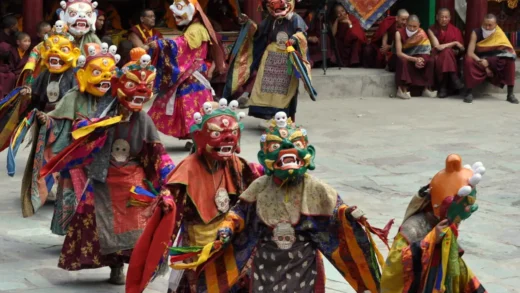
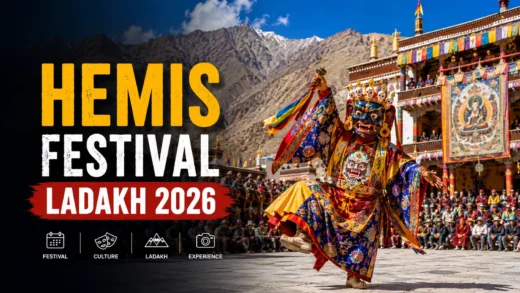
The spacious courtyard serves as the stage for the spectacular Cham mask dances performed during the Hemis Festival.
Scenic Viewpoints
Upper terraces offer panoramic views of the surrounding mountains, valleys, and traditional Ladakhi villages.
Museum and Sacred Relics
The monastery museum displays ceremonial masks, ancient weapons, sacred relics, rare thangkas, ritual instruments, and centuries-old Buddhist artifacts.
Festivals Celebrated at Hemis Monastery
The annual Hemis Festival is one of the biggest religious celebrations in Ladakh.
Hemis Festival
When: June or July (according to the Tibetan lunar calendar)
Festival Highlights
- Sacred Cham mask dances
- Traditional music performances
- Buddhist rituals
- Prayer ceremonies
- Processions
- Cultural performances
- Blessing ceremonies
Cultural Importance
The festival celebrates the birth anniversary of Guru Padmasambhava and symbolizes the triumph of good over evil.
Visitor Experience
Thousands of pilgrims, photographers, monks, and international tourists gather to witness colourful costumes, elaborate masks, and centuries-old religious traditions.
Things to Do at Hemis Monastery
- Explore the monastery museum.
- Attend the famous Hemis Festival.
- Observe monks during prayer ceremonies.
- Admire centuries-old Buddhist murals.
- Visit the sacred library.
- Meditate in peaceful surroundings.
- Enjoy panoramic mountain views.
- Photograph traditional Himalayan architecture.
- Visit nearby Hemis National Park.
- Learn about Ladakh’s Buddhist heritage.
Photography Guide
Best Photography Spots
- Main monastery courtyard
- Entrance gateway
- Rooftop terraces
- Prayer flag viewpoints
- Mountain backdrop
Sunrise Photography
Early morning light beautifully illuminates the monastery against the Himalayan landscape.
Sunset Photography
Golden-hour lighting creates dramatic shadows across the monastery buildings and surrounding mountains.
Drone Regulations
Drone photography generally requires prior permission from local authorities and monastery management.
Photography Etiquette
- Do not use flash inside temples.
- Respect monks during prayers.
- Seek permission before photographing people.
- Follow all restricted-area signs.
How to Reach Hemis Monastery
By Air
The nearest airport is Kushok Bakula Rimpochee Airport in Leh, approximately 45 kilometres away. Taxis are available outside the airport.
By Road
Hemis Monastery is connected to Leh by a well-maintained road via Karu. The journey takes around one to one-and-a-half hours.
By Bike
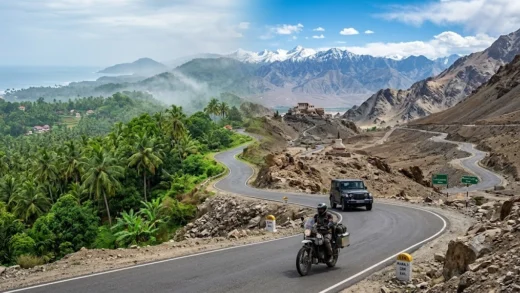
Motorcycle enthusiasts frequently include Hemis Monastery as part of their Ladakh road trip itinerary.
By Taxi
Private taxis from Leh are the easiest and most comfortable way to visit the monastery.
By Public Transport
Limited local buses connect Leh with nearby villages, but taxis offer greater flexibility for sightseeing.
Distance Chart
| Destination | Distance |
|---|---|
| Leh | 45 km |
| Nubra Valley | 165 km |
| Pangong Lake | 180 km |
| Lamayuru | 170 km |
| Kargil | 260 km |
| Alchi | 115 km |
| Diskit | 160 km |
| Hanle | 255 km |
Best Time to Visit
Summer (May to September)
Summer offers pleasant temperatures, clear skies, open mountain roads, and the opportunity to attend the famous Hemis Festival.
Autumn (September to October)
Autumn provides beautiful landscapes, fewer tourists, and crisp weather, making it ideal for photography.
Winter (November to March)
Winter transforms the monastery into a peaceful snow-covered retreat, although temperatures remain extremely cold and some roads may become inaccessible.
Spring (April)
Spring brings blooming vegetation, fresh mountain air, and moderate tourist crowds, making it another enjoyable season for visiting.
Nearby Attractions
Several famous Ladakh attractions can easily be combined with a visit to Hemis Monastery.
- Hemis National Park
- Thiksey Monastery
- Shey Palace
- Stakna Monastery
- Sindhu Ghat
- Leh Palace
- Shanti Stupa
- Matho Monastery
These destinations make excellent additions to any Things to Do in Ladakh itinerary.
Travel Tips
- Spend at least two days acclimatizing in Leh before visiting.
- Carry warm clothing throughout the year.
- Wear comfortable walking shoes.
- Dress modestly while entering prayer halls.
- Maintain silence during religious ceremonies.
- Carry sufficient cash as ATM facilities are limited near the monastery.
- Mobile network coverage may be weak in some areas.
- Always respect local customs and monastery rules.
Lesser-Known Facts About Hemis Monastery
- Hemis Monastery is the wealthiest monastery in Ladakh.
- It possesses one of the world’s largest sacred thangkas.
- The giant thangka is displayed only once every twelve years.
- The monastery houses one of Ladakh’s finest Buddhist museums.
- Its remote location helped preserve many priceless Buddhist treasures from historical invasions.
Why You Should Visit Hemis Monastery
Hemis Monastery is much more than a historical monument. It is a living centre of Buddhist culture where centuries-old traditions continue to thrive. From breathtaking Himalayan scenery and remarkable architecture to vibrant festivals and peaceful spiritual experiences, every visit offers something memorable. Whether you are interested in history, photography, spirituality, or Himalayan adventure, Hemis Monastery remains one of the finest destinations featured in every Ladakh Travel Guide.
Frequently Asked Questions
1. Why is Hemis Monastery famous?
Hemis Monastery is famous for being the largest monastery in Ladakh, its annual Hemis Festival, giant sacred thangka, and exceptional collection of Buddhist relics and artworks.
2. Where is Hemis Monastery located?
It is located in Hemis Village, around 45 kilometres southeast of Leh in Ladakh.
3. Which Buddhist school does Hemis Monastery belong to?
The monastery belongs to the Drukpa Kagyu school of Tibetan Buddhism.
4. What is the best time to visit Hemis Monastery?
The best time is from May to September, especially during the Hemis Festival held in June or July.
5. Is there an entry fee?
Yes. Visitors are generally required to pay a nominal entrance fee, which varies for Indian and international tourists.
6. Can visitors take photographs inside the monastery?
Photography is permitted outdoors. Some indoor areas require permission, and flash photography is usually not allowed.
7. How much time should I spend at Hemis Monastery?
Most visitors spend two to three hours exploring the monastery, museum, and surrounding viewpoints.
8. Is Hemis Monastery suitable for families?
Yes. Families, photographers, pilgrims, and history enthusiasts all enjoy visiting Hemis Monastery.
9. Are guided tours available?
Yes. Local guides and taxi operators from Leh often provide guided tours with historical and cultural insights.
10. Can Hemis Monastery be visited on a day trip from Leh?
Yes. Hemis Monastery is one of the most popular day-trip destinations from Leh and can easily be visited along with nearby attractions.
Conclusion
Hemis Monastery stands as one of the greatest treasures of Ladakh Tourism, preserving centuries of Buddhist philosophy, art, and Himalayan culture. From its magnificent architecture and priceless murals to its vibrant annual festival and serene mountain setting, every aspect of the monastery reflects Ladakh’s rich spiritual heritage. Whether you are exploring the best Monasteries in Ladakh, searching for unforgettable Things to Do in Ladakh, or simply seeking peace amid the Himalayas, Hemis Monastery offers an enriching experience that will remain with you long after your journey ends.