

Introduction
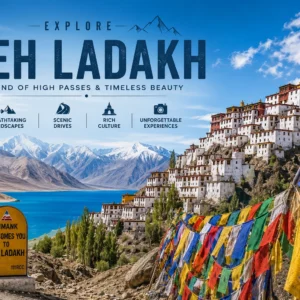
Perched high on Namgyal Hill overlooking the historic town of Leh, Namgyal Tsemo Monastery is one of the most iconic and spiritually significant monasteries in Ladakh. Built in the 15th century, this ancient monastery combines remarkable history, sacred Buddhist traditions, and breathtaking Himalayan scenery. Visitors are rewarded with panoramic views of Leh Palace, the Indus Valley, and the snow-capped peaks that surround the region.
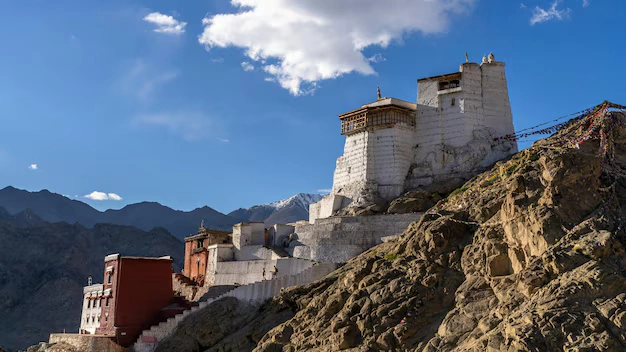
The monastery is especially renowned for its magnificent three-storey Maitreya Buddha statue, centuries-old murals, and priceless Buddhist scriptures. Whether you are a pilgrim, photographer, history enthusiast, or adventure traveler, Namgyal Tsemo Monastery offers an unforgettable glimpse into Ladakh’s rich Buddhist heritage. It is an essential stop for anyone exploring the famous monasteries in Ladakh and seeking a deeper understanding of the region’s spiritual legacy.
| Details | Information |
|---|---|
| Location | Namgyal Hill, Leh, Ladakh, India |
| District | Leh District |
| Altitude | Approximately 3,700 meters (12,139 feet) above sea level |
| Founded | Around 1430 CE |
| Buddhist School | Gelug and Drukpa traditions (historically associated with Tibetan Buddhism) |
| Founder | King Tashi Namgyal |
| Best Time to Visit | May to September |
| Entry Fee | Free (Donations are appreciated) |
| Timings | 7:00 AM – 6:00 PM |
| Photography Rules | Photography is permitted outdoors. Ask permission before photographing monks or temple interiors. Flash photography is discouraged. |
| Nearby Attractions | Leh Palace, Shanti Stupa, Leh Market, Sankar Monastery, Hall of Fame Museum |
| Distance from Leh | Approximately 2 km |
History of Namgyal Tsemo Monastery
Founding History
Namgyal Tsemo Monastery was founded around 1430 CE by King Tashi Namgyal, one of the most respected rulers of the Namgyal dynasty. The monastery was strategically built on a hilltop overlooking Leh to symbolize both spiritual guidance and royal authority.

 10°C
10°C
- Temperature
- Rain Chance
- Wind

Founder and Lineage
King Tashi Namgyal played an important role in strengthening Buddhism throughout Ladakh. Under his rule, numerous religious monuments and monasteries were established, helping preserve Tibetan Buddhist traditions across the Himalayan region.
Important Historical Events
Over the centuries, Namgyal Tsemo Monastery has survived political changes, invasions, and harsh Himalayan weather. Despite these challenges, it has continued to serve as an active center of worship and Buddhist learning while preserving valuable scriptures and sacred artworks.
Role in Ladakh’s Buddhist Heritage
The monastery remains one of the oldest surviving Buddhist centers in Leh. It has long been associated with meditation, Buddhist education, and religious ceremonies, making it an important part of Ladakh’s spiritual landscape.
Legends and Folklore
Local legends say the monastery was built on a sacred hill believed to protect Leh from negative energies. Many pilgrims believe that prayers offered at Namgyal Tsemo Monastery bring peace, prosperity, and spiritual blessings.
Architecture and Design
Exterior Architecture
Built using traditional Ladakhi stone and mud-brick construction, the monastery blends naturally with the rocky mountainside. Whitewashed walls, wooden balconies, prayer flags, and golden finials create a striking contrast against the rugged Himalayan backdrop.
Prayer Halls
The monastery houses beautifully decorated prayer halls where monks gather for daily chanting and religious ceremonies. Colorful pillars, butter lamps, and intricate altar decorations create a peaceful atmosphere.
Ancient Murals
The walls are adorned with centuries-old murals illustrating scenes from Buddhist teachings, mandalas, Bodhisattvas, and protector deities. These paintings reflect the artistic traditions of Tibetan Buddhism.
Thangkas
Exquisite silk thangkas depicting Buddha, Avalokiteshvara, Guru Padmasambhava, and other deities are displayed during festivals and special ceremonies.
Statues
The monastery’s greatest treasure is its magnificent 8-meter-tall gilded statue of Maitreya Buddha (Future Buddha). Other statues include Avalokiteshvara, Manjushri, and various guardian deities.
Monastery Layout
The monastery complex includes:
- Main temple
- Prayer halls
- Meditation rooms
- Monk residences
- Courtyards
- Shrines
- Viewing terraces
Unique Artistic Elements
Highlights include:
- Traditional Ladakhi wood carvings
- Tibetan-style murals
- Hand-painted ceilings
- Ancient prayer wheels
- Decorative Buddhist altars
Restoration Efforts
Several restoration projects have been undertaken to preserve the monastery’s murals, wooden structures, and sacred artifacts while maintaining its historic character.
Religious Significance
Namgyal Tsemo Monastery continues to be an active place of Buddhist worship and meditation.
Buddhist Traditions Practiced
- Tibetan Buddhism
- Mahayana Buddhism
- Vajrayana rituals
- Meditation
- Scriptural chanting
Important Deities
The monastery honors several important Buddhist figures including:
- Maitreya Buddha
- Avalokiteshvara
- Manjushri
- Guru Padmasambhava
- Dharma Protectors
Spiritual Importance
Pilgrims visit the monastery to seek blessings for wisdom, compassion, protection, and inner peace.
Monastic Life
Resident monks spend their days studying Buddhist philosophy, performing rituals, teaching young novices, maintaining the monastery, and practicing meditation.
Daily Rituals
Daily religious activities include:
- Morning prayers
- Butter lamp offerings
- Chanting ceremonies
- Meditation sessions
- Evening prayers
What to See Inside Namgyal Tsemo Monastery
Main Temple
The beautifully decorated temple serves as the spiritual heart of the monastery.
Assembly Hall
Visitors can admire colorful murals, sacred altars, prayer cushions, and ceremonial objects used during religious gatherings.
Maitreya Buddha Statue
The enormous gilded Maitreya Buddha is the monastery’s most famous attraction and one of Ladakh’s finest Buddhist statues.
Ancient Murals
Beautiful murals depict Buddhist cosmology, Bodhisattvas, celestial beings, and important religious stories.
Library
The monastery preserves ancient handwritten Buddhist manuscripts and sacred scriptures.
Courtyards
Quiet courtyards provide peaceful spaces for meditation while offering spectacular views of Leh.
Scenic Viewpoints
The monastery offers panoramic views of:
- Leh town
- Leh Palace
- Indus Valley
- Stok Kangri
- Zanskar Range
Sacred Relics
Visitors may also see:
- Ancient scriptures
- Prayer wheels
- Butter lamps
- Religious artifacts
- Historic statues
Festivals Celebrated at Namgyal Tsemo Monastery
Losar (Tibetan New Year)
The monastery celebrates Losar with prayers, blessings, offerings, and traditional cultural performances.
Buddha Purnima
Special prayers commemorate the birth, enlightenment, and Mahaparinirvana of Lord Buddha.
Annual Prayer Ceremonies
Throughout the year monks conduct religious ceremonies featuring scripture recitations and community prayers.
Rituals
Festival rituals include:
- Butter lamp offerings
- Prayer chanting
- Sacred processions
- Blessing ceremonies
Mask Dances
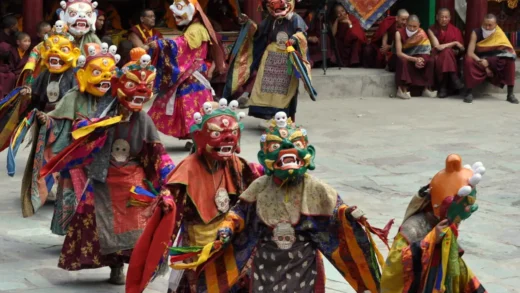
Although Namgyal Tsemo Monastery is not primarily known for grand Cham festivals, ceremonial masked dances may occasionally accompany regional celebrations.
Visitor Experience
Festival visitors can experience traditional music, colorful robes, Buddhist rituals, and Ladakhi hospitality.
Things to Do at Namgyal Tsemo Monastery
- Climb to the monastery from Leh.
- Enjoy panoramic Himalayan views.
- Visit the giant Maitreya Buddha statue.
- Observe monks during prayer sessions.
- Explore centuries-old Buddhist artwork.
- Meditate in peaceful surroundings.
- Photograph Leh from the hilltop.
- Visit nearby Leh Palace.
- Learn about Ladakh’s Buddhist history.
- Experience one of the oldest monasteries in Ladakh.
Photography Guide
Best Photo Spots
- Entrance staircase
- Prayer flags
- Monastery exterior
- Hilltop viewpoints
- Leh city panorama
Sunrise Photography
Morning sunlight beautifully illuminates Leh, creating excellent opportunities for landscape photography.
Sunset Photography
Golden-hour lighting offers spectacular views of the surrounding Himalayan mountains.
Drone Regulations
Drone photography generally requires official permission and is restricted near military installations and religious sites.
Photography Etiquette
- Ask permission before photographing monks.
- Avoid flash inside temples.
- Respect ongoing prayers.
- Maintain silence.
- Dress modestly.
How to Reach Namgyal Tsemo Monastery
By Air
The nearest airport is Kushok Bakula Rimpochee Airport in Leh, located approximately 7 km away.
By Road
Leh is connected to Srinagar and Manali via seasonal highways. The monastery can be reached by road within minutes from Leh town.
By Bike
Motorcyclists can easily include Namgyal Tsemo Monastery in their Leh sightseeing route.
By Taxi
Local taxis are available throughout Leh and reach the monastery in about 10–15 minutes.
By Public Transport
There are no regular buses directly to the monastery. Most visitors hire taxis or walk from Leh.
Distance Chart
| Destination | Approximate Distance |
|---|---|
| Leh | 2 km |
| Nubra Valley | 120 km |
| Pangong Lake | 160 km |
| Lamayuru | 125 km |
| Kargil | 220 km |
| Alchi | 68 km |
| Diskit | 118 km |
| Hanle | 255 km |
Best Time to Visit
Summer (May–September)
Pleasant weather, clear skies, and fully accessible roads make summer the best season to visit.
Autumn (October)
Autumn offers fewer tourists, cool weather, and vibrant mountain landscapes.
Winter (November–February)
Snow-covered scenery creates magical views, though temperatures are extremely cold and some roads may become difficult.
Spring (March–April)
Spring brings blooming apricot trees around Leh and quieter sightseeing opportunities.
Nearby Attractions
Several famous attractions are located close to Namgyal Tsemo Monastery, making it easy to explore multiple landmarks in one day.
- Leh Palace
- Shanti Stupa
- Leh Main Bazaar
- Sankar Monastery
- Hall of Fame Museum
- Spituk Monastery
- Stok Palace
- Magnetic Hill
- Confluence of the Indus and Zanskar Rivers
Travel Tips
- Spend at least two days acclimatizing in Leh before sightseeing.
- Carry warm clothing throughout the year.
- Wear comfortable walking shoes.
- Stay hydrated at high altitude.
- Respect monks and religious ceremonies.
- Donations are welcome but not compulsory.
- Photography restrictions may apply inside temples.
- Mobile networks work well in Leh but may be weaker near the monastery.
- ATMs are available in Leh town.
- Visit early morning to avoid crowds.
Lesser-Known Facts About Namgyal Tsemo Monastery
- The monastery houses one of Ladakh’s oldest gilded Maitreya Buddha statues.
- It overlooks both Leh Palace and the historic town of Leh.
- The hilltop location once served strategic as well as religious purposes.
- Ancient Buddhist manuscripts are still preserved here.
- The monastery offers one of the finest sunrise viewpoints in Leh.
- It remains closely associated with the Namgyal royal dynasty.
- Many visitors overlook its peaceful meditation areas hidden behind the main temple.
Why You Should Visit Namgyal Tsemo Monastery
Namgyal Tsemo Monastery offers an extraordinary combination of history, spirituality, architecture, and breathtaking Himalayan scenery. From its towering Maitreya Buddha and ancient murals to its peaceful atmosphere and spectacular viewpoints, every visit leaves a lasting impression. Whether you are exploring the best monasteries in Ladakh, planning a Ladakh travel guide, or searching for meaningful things to do in Ladakh, this remarkable Buddhist monastery deserves a place on every travel itinerary.
Frequently Asked Questions
1. Where is Namgyal Tsemo Monastery located?
It is located on Namgyal Hill overlooking Leh town in the Leh district of Ladakh.
2. Who built Namgyal Tsemo Monastery?
The monastery was founded by King Tashi Namgyal around 1430 CE.
3. Is there an entry fee?
No. Entry is generally free, although donations are welcomed.
4. What is the monastery famous for?
It is famous for its giant gilded Maitreya Buddha statue, ancient murals, manuscripts, and panoramic views.
5. How long does it take to visit?
Most visitors spend between one and two hours exploring the monastery.
6. Can visitors take photographs?
Photography is allowed outside. Permission should be obtained before photographing interiors or monks.
7. Is the monastery suitable for families?
Yes. Families, senior citizens, and children can visit, although the uphill climb may require extra care.
8. Which season is best for visiting?
May to September offers the best weather and easiest access.
9. Can Namgyal Tsemo Monastery be combined with other attractions?
Yes. It is commonly visited together with Leh Palace, Shanti Stupa, and Leh Market.
10. Why is Namgyal Tsemo Monastery important?
It is one of Ladakh’s oldest Buddhist monasteries and preserves centuries of religious history, art, and spiritual traditions.
Conclusion
Standing high above Leh, Namgyal Tsemo Monastery is a timeless symbol of Ladakh’s rich Buddhist heritage. Its centuries-old history, magnificent Maitreya Buddha statue, sacred murals, and breathtaking Himalayan views make it one of the most rewarding destinations in the region. Whether you seek spiritual peace, cultural discovery, or unforgettable photography, a visit to Namgyal Tsemo Monastery offers an enriching experience that perfectly captures the essence of Ladakh Tourism. As one of the finest Buddhist monasteries in Ladakh, it remains an essential stop for every traveler exploring the beauty, history, and spirituality of the Himalayas.